
From Solving Puzzles to Winning Games: The Power of Deliberate Practice
Chessadda Strategy & Tactics Specialist
Chessadda Editorial Team
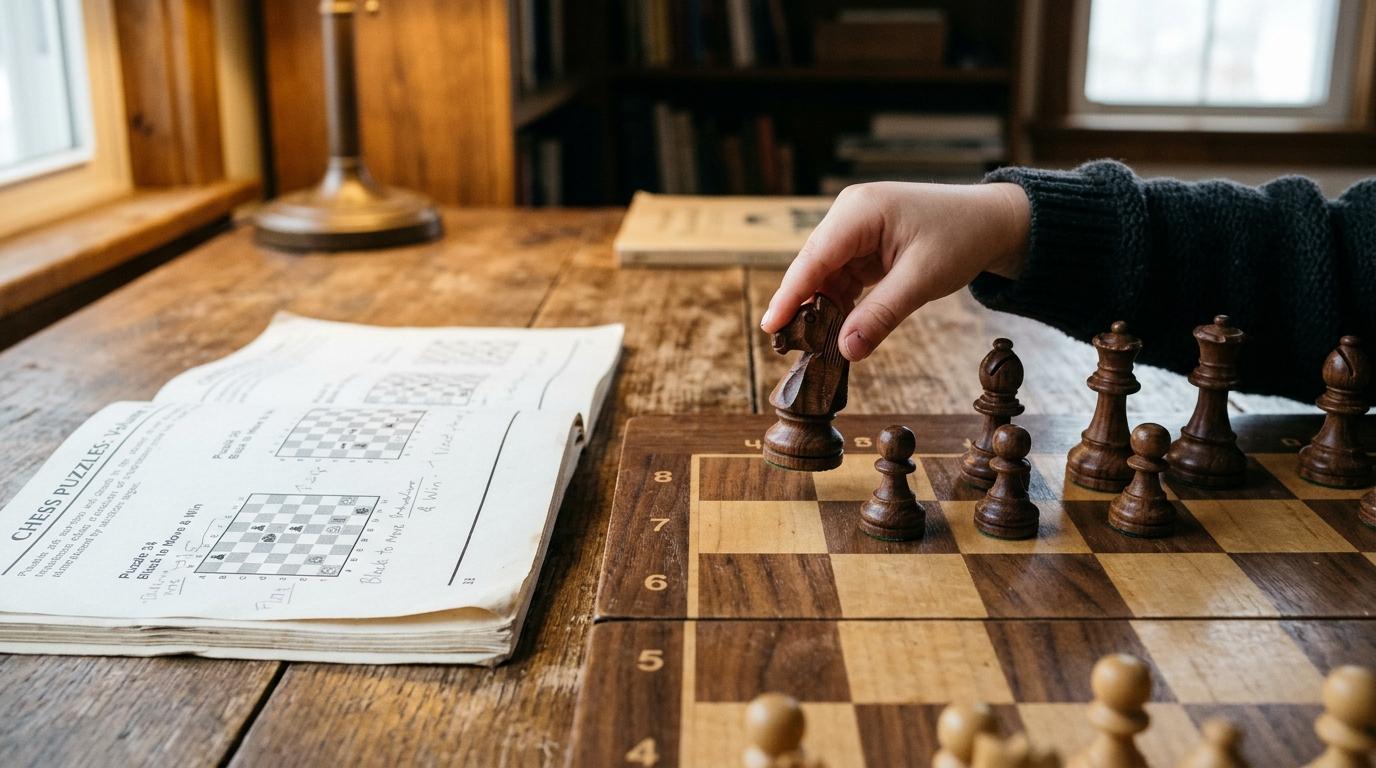
Many parents share an intriguing observation with us: "My child can solve 20 tactical puzzles in a row on a workbook or screen, but when they sit down to play an actual game, they miss the exact same tactic!"
It is one of the most common hurdles in junior chess development. The reason is simple: when solving a puzzle, children already know there is a trick hidden on the board. In a real match, nobody taps them on the shoulder to announce: "White to play and win in two moves!"
Bridging the gap between isolated puzzle-solving and live tournament success requires a concept sports scientists call deliberate practice. It is not about how many hours your child spends moving pieces—it is about the quality, intention, and feedback loop built into each session.
1. Developing the 'Tactical Radar'
In our chess courses, we teach students that tactics rarely appear out of thin air—they leave clear clues. An uncastled king, an undefended bishop, or an aligned queen and rook are all bright tactical signals. Instead of memorizing move sequences, children learn to scan for these triggers automatically on every single move.When a child learns to ask: "What piece is unguarded right now?" before every move, their puzzle-solving knowledge suddenly unlocks during real games.
2. Hands-on Tactile Board Training
While solving puzzles on a phone or tablet is convenient, moving real, physical pieces trains spatial memory in a much deeper way. Our newly released free puzzle book, First Move to Mastery, provides 420 structured tactical drills with diagrammatic explanations designed specifically for quiet desk study and hands-on board exploration.Setting up positions on a real wooden board forces children to slow down, look at diagonals from different angles, and physically feel the spatial relationships between pieces.
3. Why Isolated Repetition Falls Short Without Guidance
Children can easily develop bad puzzle habits when practicing unmonitored: guessing moves repeatedly until the app turns green, or skipping hard problems when they get stuck.In contrast, deliberate practice requires staying with a tricky position, calculating candidate moves, and verifying the opponent's best defense. This is where personalized mentorship makes all the difference.
4. Post-Game Reviews: Where True Mastery Happens
A puzzle gives immediate satisfaction, but reviewing a game you just lost teaches resilience and deep self-awareness. When our certified coaches review a student's match, we don't just point out mistakes; we ask the child: "What was your inner plan when you played this move?"That gentle dialogue transforms a lost piece into a lightbulb moment. Children stop repeating impulsive blunders and begin building their own internal library of strategic ideas.
If you want your young learner to develop structured calculation habits and genuine confidence, explore our online chess classes and book a free demo class today!
Ready to See Your Child Master Chess?
Book a FREE interactive 1-on-1 demo session with our certified coaches today and unlock your child's full cognitive potential.
Book Your Free Demo Class