
How Playing Chess Boosts Academic Performance & Focus in Children
Chessadda Educational Specialist
Chessadda Editorial Team
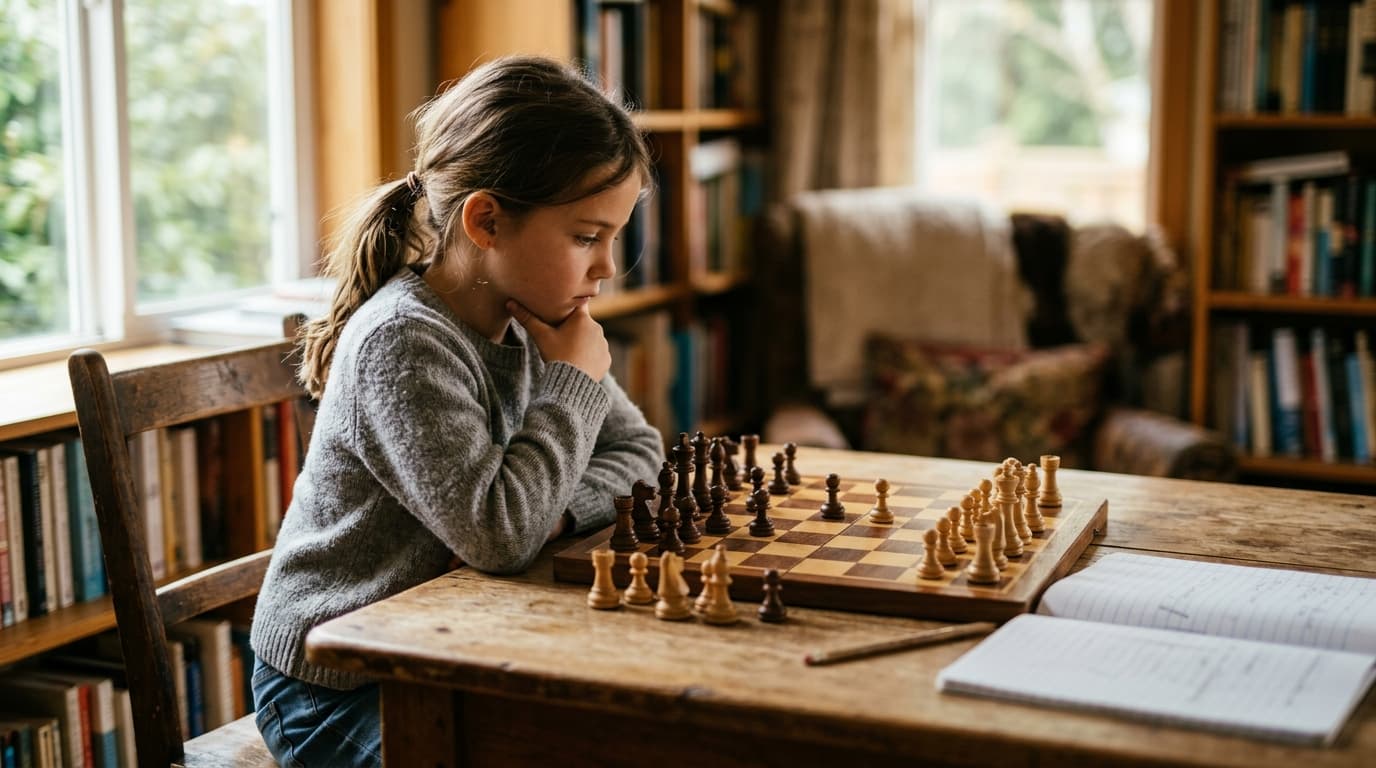
When parents first reach out to us at Chessadda, one of the most common questions they ask is: *"Will playing chess actually help my child in school, or is it just a fun weekend hobby?"* It's a fantastic question, and the answer is something we get to witness every single week in our live sessions. Watching a young child sit down at a board, take a deep breath, and quietly contemplate three moves ahead is where real mental magic happens.
1. Building Natural Concentration in a Noisy World
In an era filled with fast-paced video shorts and non-stop notifications, learning to slow down is almost like a superpower. Chess offers kids a quiet, encouraging sanctuary where there are no flashing lights rushing them along.When a child plays a match, they learn to pause, scan the entire board, and ask themselves: *"If I move my Knight here, what might my opponent do next?"* That habit of calm observation doesn't stay on the 64 squares—it follows them directly into their classroom. Parents frequently tell us that after a few months of guided play, their kids start sitting through homework sessions with far more patience and focus.
2. Problem-Solving with Quiet Confidence
Every single chess match presents a fresh, exciting puzzle to solve. There's no single 'memorized' answer—kids have to evaluate small risks, test out creative ideas, and make independent decisions on every turn.More importantly, chess teaches children that making a mistake isn't something to feel bad about. When a pawn gets captured or a trick gets missed, our coaches gently turn it into a detective game: *"Let's see what secret lesson this move has for us!"* Participating in friendly online chess classes for kids helps nurture these problem-solving habits in a warm, supportive atmosphere where every effort is celebrated.
3. Making Math and Spatial Logic Feel Like Play
Chess is naturally rich with visual math, geometry, line calculations, and coordinate grids. But instead of feeling like a dry textbook exercise, kids absorb these concepts while guiding their pieces on heroic quests across diagonals and ranks.When young players practice calculating trades (like exchanging a Bishop for three pawns), mental arithmetic starts to feel intuitive and fun. They aren't just memorizing numbers—they're visualising outcomes and developing strong working memory.
If you'd love to see how your child responds to the board, explore our guided chess courses or pop in for a warm, cozy chat with one of our coaches by booking a free demo class today!
Ready to See Your Child Master Chess?
Book a FREE interactive 1-on-1 demo session with our certified coaches today and unlock your child's full cognitive potential.
Book Your Free Demo Class